


In our fast-paced modern world, stress and sleep exist in a complex, often destructive relationship. Understanding this connection—and more importantly, learning how to break the cycle—can transform not only your nights but your overall health and wellbeing.
The Stress-Sleep Connection: A Vicious Cycle
When we experience stress, our bodies activate the hypothalamic-pituitary-adrenal (HPA) axis, triggering the release of cortisol—our primary stress hormone. While cortisol serves an important function in helping us respond to challenges, chronic elevation creates significant problems for sleep.
Research has revealed that stress-related sleep disorders and sleep deprivation are associated with maladaptive changes in the HPA axis, leading to neuroendocrine dysregulation. This creates a feedback loop: stress disrupts sleep, and poor sleep further elevates stress hormones, making it even harder to achieve restorative rest.
Understanding Cortisol's Impact on Sleep
Cortisol follows a natural circadian rhythm, typically peaking in the early morning hours to help us wake up and gradually declining throughout the day to allow melatonin—our sleep hormone—to take over. However, chronic stress disrupts this delicate balance.
Studies show that increased cortisol suppresses melatonin and dilutes adenosine, the molecule responsible for sleep pressure, resulting in elevated arousal levels at bedtime, insomnia, and fragmented sleep. Even more concerning, this elevated cortisol then prevents the deep, restorative sleep stages our bodies need for cellular repair and regeneration.
Research on individuals with chronic insomnia has found that nocturnal wakes are instantaneously accompanied by high cortisol levels, while deep sleep corresponds with the lowest levels of stress-related hormones. This pattern supports the hypothesis of increased pulse-release of cortisol in insomnia conditions.

The Power of Bedtime Rituals
Given the complexity of stress-induced sleep disorders, the solution extends beyond simply "trying to relax." Creating a consistent, intentional bedtime ritual serves as a powerful signal to your body and mind that it's time to transition from the stress of the day to restorative rest.
A bedtime ritual works on multiple levels:
Psychological Anchoring: Repetitive, calming activities create a mental association with sleep, helping to quiet racing thoughts and reduce cognitive arousal that often accompanies stress.
Physiological Regulation: Consistent routines help synchronize your circadian rhythm, supporting the natural decline of cortisol and rise of melatonin that facilitates sleep onset.
Stress Reduction: Dedicating time to self-care activities sends a powerful message that you're prioritizing your wellbeing, which can help lower overall stress levels.
Sensory Transition: Engaging the senses—particularly through aromatherapy—provides a tangible bridge between the demands of the day and the sanctuary of sleep.

Aromatherapy: Science Meets Ancient Wisdom
While aromatherapy has been used for centuries to promote relaxation and sleep, modern research is now validating its effectiveness with compelling scientific evidence.
From Skin to Brain: The Journey of Essential Oils
When you apply BYNACHT Perfect Nacht White Noise Balm to your pulse points – wrists, temples, neck, or soles of your feet – you initiate a fascinating biochemical process. The 100% pure essential oils of vetiver, thyme, and bergamot begin their journey through your body via two parallel pathways: the olfactory route and the transdermal route.
The Direct Path: Olfactory Stimulation
Upon inhalation, the aromatic molecules immediately activate the olfactory receptors in your nose. These send signals directly to the limbic system – the emotional core of your brain that also governs stress responses and sleep regulation. This pathway works almost instantaneously, explaining why the scent alone has a calming effect.
The Deeper Level: Transdermal Absorption and the Blood-Brain Barrier
Simultaneously, the tiny molecules of essential oils penetrate through your skin. This process is optimized by application to pulse points, where the skin is thinner and blood circulation more intense. The active compounds enter the bloodstream and from there – and this is the crucial difference to many other substances – they can cross the blood-brain barrier.
Terpenes: The Key Molecules with Brain Access
The secret to this remarkable ability lies in terpenes and sesquiterpenes – the primary constituents of essential oils. These small, lipophilic (fat-soluble) molecules possess two decisive properties:
1. Small Molecular Size: At only 136-204 atomic mass units, sesquiterpenes are small enough to pass through the highly selective blood-brain barrier.
2. Lipophilicity: Since the brain consists largely of fat, these fat-soluble molecules can easily penetrate brain tissue.
Scientific studies have confirmed that terpenes from essential oils can be absorbed through the skin and cross the blood-brain barrier to exert direct effects on the central nervous system.

Creating Your Sleep-Enhancing Bedtime Ritual
Armed with this scientific understanding, you can create a personalized bedtime ritual that actively counteracts stress and promotes restorative sleep:
1. Establish Consistency: Begin your ritual at the same time each evening, signaling to your body's circadian system that sleep is approaching.
2. Create a Sensory Sanctuary: Dim the lights, lower the temperature slightly, and eliminate digital screens at least 30 minutes before bed.
3. Incorporate Aromatherapy: Apply sleep-promoting essential oils to pulse points, use a diffuser, or incorporate them into massage oils or balms. The olfactory stimulation directly activates the brain's relaxation pathways.
4. Engage in Gentle Movement: Light stretching or gentle yoga can help release physical tension accumulated during the day.
5. Practice Mindful Breathing: Deep, slow breathing activates the parasympathetic nervous system, counteracting the stress response and lowering cortisol levels.
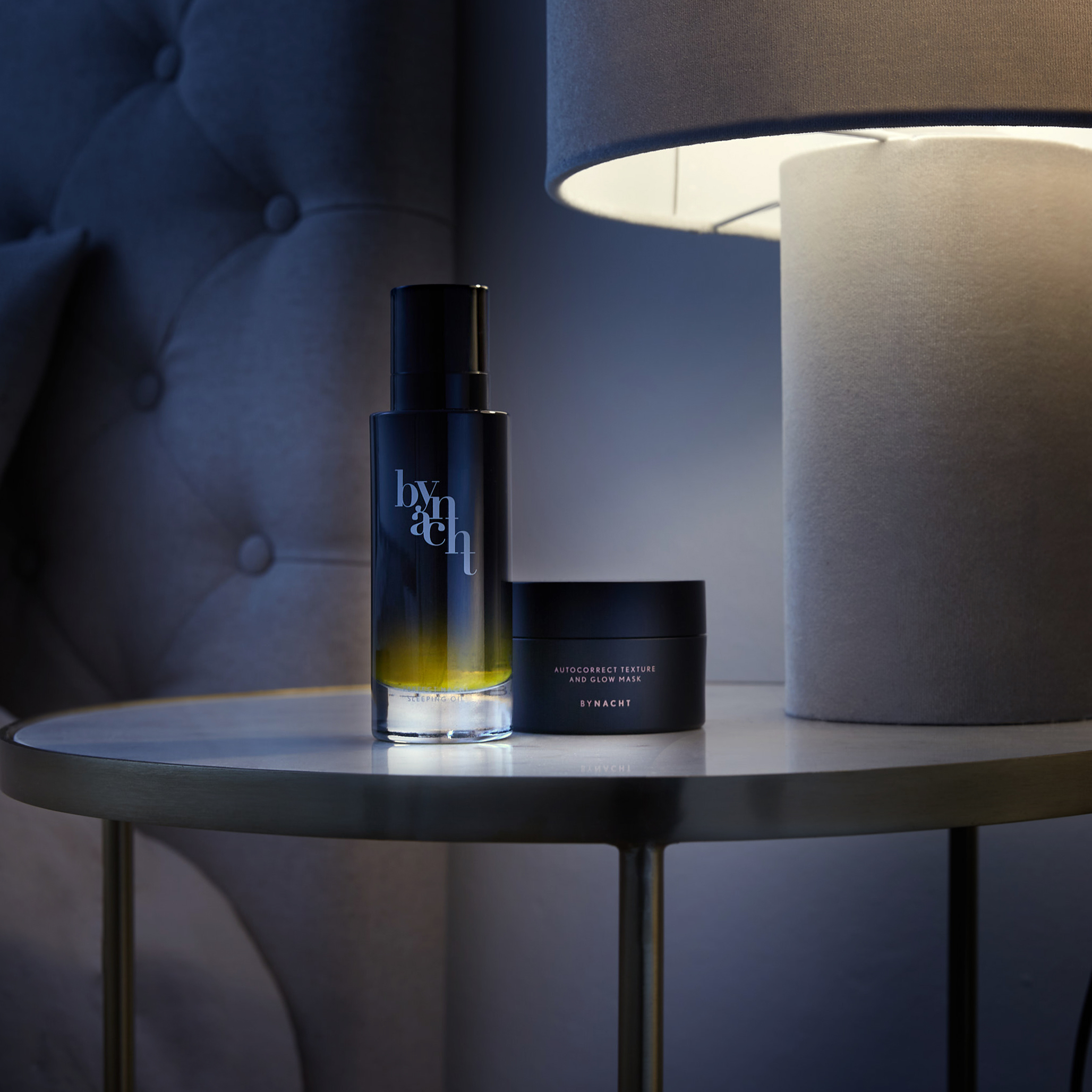
6. Skincare as Self-Care: Transform your evening skincare routine into a mindful ritual. The act of caring for your skin—especially with products designed to work synergistically with your body's nighttime renewal processes—provides both physical and psychological benefits.
THE BETTER YOU SLEEP, THE BETTER YOU LOOK!

Jessica Hoyer, Founder BYNACHT